


This walking tour is intended for those who want to get acquainted with the 1000-year-long history of Prague, see its major landmarks and hidden historical corners. It is a walking tour of 4 hours, so it is a bit of an exercise — people for whom walking is a challenge, temporarily or for longer time, are invited another time. It does not include any paid entries. The languages of the tour are English, French, or Russian (one at a time, no mix). I welcome curiosity and interest in history, art and architecture — we will be talking all the way, questions and dialogue are more than welcome. Groups are small, so everyone participates. Pickup from the hotel is offered.
Prague has a long and rich history, where periods of rise were followed by periods of decline. It is deeply connected and intertwined with Slavic, German and Jewish history. First settlements date back to the 9th century; and at that time, in nearby Moravia, Greek brothers, later saints Cyril and Methodius invented the Slavic (Cyrillic) alphabet. The 10th century is the time of the first monasteries and saints in Prague and around. Then came the Middle Ages, during which Prague rose quickly until it became one of the biggest cities in Europe and the capital of the Holy Roman Empire under the rule of Charles IV (quite an eminent personality). And then — here in Prague, not in Germany or Switzerland, began the first Protestant movement and Bohemia was for 200 years a Protestant country. There were wars, there were personalities, there were battles, there were executions. And Prague bear evidence of all this.
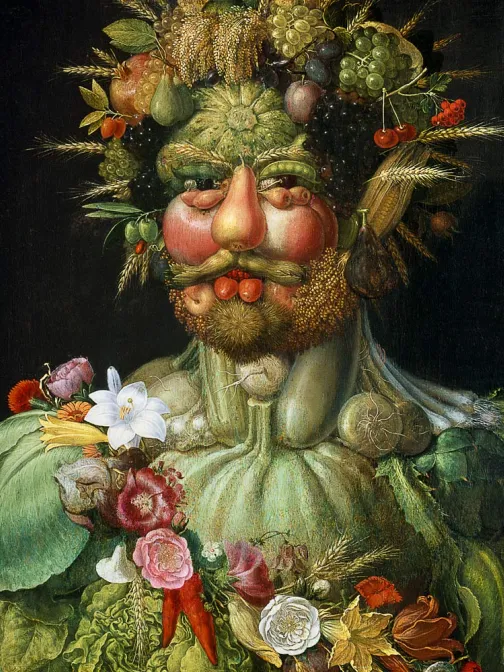
As the last accord of Prague's golden age, there was "Rudolphine Prague" — Prague of magicians, alchemists and astrologers (among the latter was Johannes Kepler), of art and curiosities. Then again wars and executions, and Prague was removed from the forefront of the European scene to return there at the end of the 19th century as the city of outstanding architecture, home to Antonín Dvořák and Bedřich Smetana, later Franz Kafka, Alfons Mucha and many outstanding engineers and designers. And its story continues in the 20th and 21st centuries, reflecting the world's political and economic streams, mixing history and traditions with modernity and an open mind, and giving the world outstanding people, works of art and engineering and discoveries.
It's impossible to cover all the city with its outstanding diversity in one walk or one day. So this walk is limited to the "tourist map" — the essential historical quarters and landmarks. We start at Prague Castle, where I give a brief introduction to its history and we look at the most valuable exterior sights (and that's not St. Vitus' facade). Then we continue out of the Castle, making a stop at a viewpoint to enjoy iconic view of Malá Strana. Depending on the mood of the group, we can make a loop to Hradčany (Castle district) with its magical Nový Svět and the Loreto, or continue directly to Malá Strana (Lesser Town). We descend to Malá Strana square by Nerudova street and then step sideways to have a look at Wallenstein Palace (and garden, in the summer). On the way we dive deeper into history — Hussite wars, defenestrations, the Battle on the White Mountain and re-Catholicisation of Bohemia, and stories of personalities — Rudolph II, Jan Hus, Albrecht of Wallenstein and others. We may briefly look into St Thomas church with its rich Baroque interior. Then we continue to Charles Bridge to enjoy views and have another dive into history, connecting at once the beginnings of the city and events of the 20th century. After the stop at the bridge and the Old Town tower, we continue to Josefov — the Jewish quarter, either by the Rudolfinum or by the Klementinum and Mariánské square (Mariánské náměstí). We make a stop at the Old-New synagogue and pass through Pařížská street enjoying the architecture and counting the years we need to work to afford something from the shop windows there. This way we arrive at the Old Town square, with its world-famous Astronomical Clock. After a stop there, we go wandering through the old town lanes optionally going to the Powder Gate and the Municipal House, and surely making a stop at the Estates Theatre and Charles University. And from there, going through hidden lanes and passages and observing fine examples of 20th-century architecture, we end up at Wenceslas Square.
Even though the tour is designed to embrace all Prague "must-sees", we will not visit places which are fervently sold by guidebooks but lack historical or cultural value. We are not going to the Lennon Wall (though we may pass it by), the Dancing House, the Book Tower and other destinations falling into the "cheap thrills" category. We will not visit Vyšehrad, because it's outside the area. We are not getting anywhere with paid entrances, including St. Vitus' or St. Nicholas' churches, the Golden Lane at Prague Castle, and others. But, believe me, what we'll see instead is more worth it.
The entire walk runs in small groups, and though it has a certain backbone, there are always some deviations in the route and a great variety of directions the talk may go. Though it's primarily historical, I avoid stuffing it with dates and facts, instead giving preference to broader context, perspective, associations and illustrative stories. It's not so much the date when the Astronomical Clock was built, but what the perception of time was in that epoch, how people organised their day and what stars meant to them. It's not the number of achievements of Charles IV, but his personality that drove his deeds and which substantially defined the later destiny of Bohemia. I do not claim to have the ultimate knowledge, but together we can look at facts and get a little closer to the people that lived hundreds of years ago, maybe understand them.
Since most visitors are new to Prague, there's a layer of practical information, life stories and background that conveys the context. There is always room for literary references and historical anecdotes.